Solution overview
Ch01.532 Solution overview
📊 Level ⭐⭐ | 6.6KB |
entities/automate-aml-alert-triage-with-amazon-quick-and-snowflake-co.md
Solution overview
深度分析
source: rss source_url: https://aws.amazon.com/blogs/machine-learning/automate-aml-alert-triage-with-amazon-quick-and-snowflake-cortex-ai/ ingested: 2026-05-29 feed_name: AWS China ML source_published: 2026-05-28T16:41:07Z
Automate AML alert triage with Amazon Quick and Snowflake Cortex AI
Financial institutions running on AWS and Snowflake benefit from a deeply integrated framework that combines Snowflake’s AI Data Cloud with AWS cloud infrastructure, including integrations with AWS services such as Amazon Simple Storage Service (Amazon S3), AWS Glue, Amazon SageMaker, and Amazon Bedrock. With over 50 native integrations between AWS services and Snowflake, organizations can build compliance workflows that maintain data security while accelerating time to value.
This post demonstrates that integration in action by automating one of the most labor-intensive workflows in financial services: anti-money laundering (AML) alert triage. You will build a triage workflow using Amazon Quick Flows and Snowflake Cortex, connected through the Amazon Quick Model Context Protocol (MCP) integration. In our testing environment, automated workflows built using Amazon Quick reduced alert investigation time from 30-90 minutes to under 5 minutes. Actual results may vary based on alert complexity and data volume.
As AI adoption matures, organizations are finding that the highest-impact deployments go beyond standalone assistants. They are repeatable workflows that orchestrate across tools teams already use, turning multi-step manual processes into a one-click experience. Amazon Quick is an enterprise AI service that provides generative AI-powered chat agents, research capabilities, Quick Flows for task automation, and Amazon Quick Automate for process automation, aggregating data from multiple sources including native indexes, custom knowledge bases, and user-uploaded files. Quick Flows, part of Amazon Quick, translates user requests into standardized MCP protocol (an open protocol standard) calls, removing the need for custom connectors while maintaining enterprise security through OAuth authentication. Quick Flows is a strong fit for AML triage because the investigation follows the same structured steps every time: collect input, run investigation, and produce output. The same MCP-based approach applies to repeatable workflows where teams currently bridge systems manually, such as FinOps cost triage, SRE incident response, or compliance investigations.
AML analysts at mid-to-large banks typically spend 30 to 90 minutes per alert manually gathering data and writing disposition narratives. According to industry research, financial institutions typically find that 90-95% of AML alerts are false positives, making efficient triage critical. Manual investigation processes at this scale can create significant workloads for compliance teams. Automation lets analysts process alerts more efficiently, reduce investigation time, and maintain compliance standards.
Solution overview
The following diagram illustrates the end-to-end integration architecture connecting Amazon Quick to Snowflake through the Model Context Protocol (MCP).
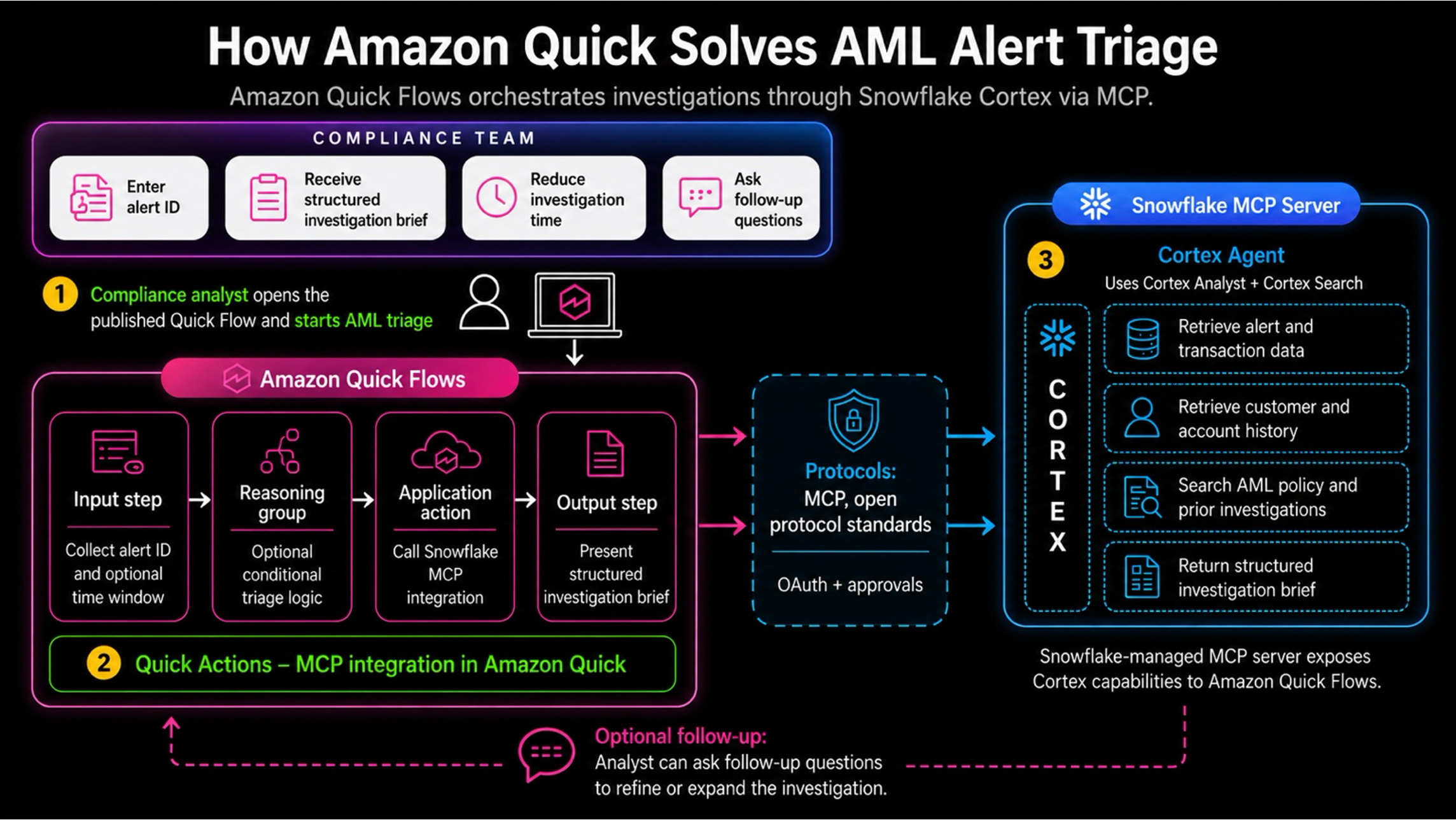
Figure 1: Integrating Snowflake-managed MCP server with Amazon Quick through Model Context Protocol
The solution uses Amazon Quick Flows as the orchestration layer, with a connection managed by Amazon Quick to reach a Snowflake Cortex Agent through a Snowflake-managed MCP server with OAuth authentication. The Cortex Agent performs the investigative work, analyzing both structured transaction data through Cortex Analyst and unstructured compliance documents through Cortex Search, while Quick Flows handles input validation, reasoning log
相关实体
- Process Financial Documents Using Amazon Bedrock Data Automa
- How Aws Smgs Uses An Ai Powered Conversational Assistant To
- 滴滴国际化客服质检智能化之路基于 Amazon Bedrock 的多语种多业务线质检实践
- Comprehensive Observability For Amazon Sagemaker Ai Llm Infe
- 对抗 Agent 遗忘Kollab 基于Amazon Bedrock Agentcore 的团队Ai工作空间实践
→ 原文存档